Introduction
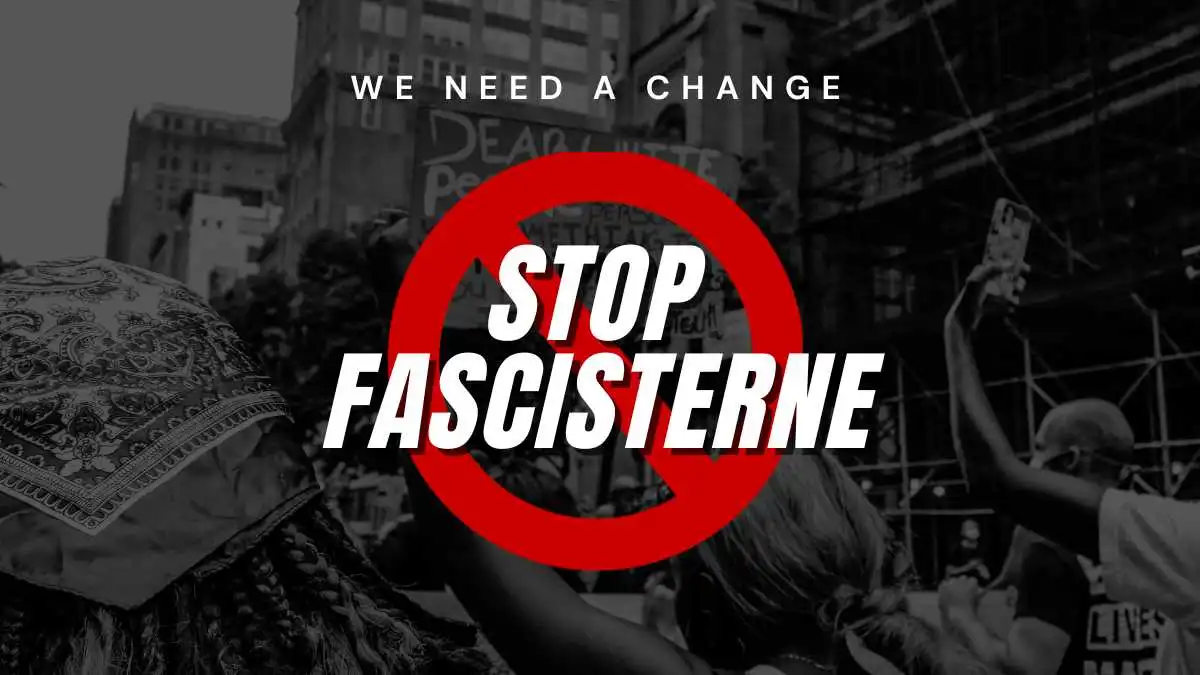
Have you ever wondered why certain political terms carry such heavy weight across languages? In Danish, “fascisterne” directly translates to “the fascists,” pointing to groups or individuals steeped in an authoritarian ideology that has shaped—and scarred—modern history. This article dives deep into the concept, unpacking its roots, manifestations, and ongoing relevance in a world still grappling with extremist views. Whether you’re curious about historical events or concerned about current trends, understanding fascisterne offers crucial insights into power dynamics and societal threats. We’ll explore everything from origins to countermeasures, all while keeping things conversational and grounded in facts. By the end, you’ll have a clearer picture of how this ideology persists and why vigilance matters.
What Does Fascisterne Mean?
The term fascisterne emerges from Danish linguistics, serving as a direct reference to those who embody fascist principles. It’s not just a label; it encapsulates a worldview centered on extreme nationalism, authoritarian control, and often, suppression of dissent. In everyday conversations in Denmark or among Scandinavian communities, fascisterne might come up when discussing historical regimes or contemporary populist movements. This word draws from the Latin “fasces,” symbolizing bundled strength, which Mussolini adopted for his party. Understanding fascisterne starts with recognizing it as more than vocabulary—it’s a warning about ideologies that prioritize unity through coercion over individual freedoms.
Beyond its etymology, fascisterne highlights how language evolves to describe political dangers. In multilingual contexts, such terms bridge cultural gaps, allowing global discussions on totalitarianism. For instance, when Danes refer to fascisterne, they might invoke memories of World War II occupations or modern far-right groups. This connection underscores the universal nature of fascist threats, reminding us that while the word is Danish, the ideology knows no borders. It’s essential to grasp this to appreciate why fascisterne remains relevant in debates about democracy and human rights.
Delving deeper, fascisterne often implies organized groups rather than lone actors, emphasizing collective action under a strong leader. This distinction helps differentiate it from related concepts like populism or conservatism. In educational settings, teaching about fascisterne involves exploring its psychological appeal—how it preys on fears of economic instability or cultural change. By framing it this way, we see fascisterne not as an abstract idea but as a tangible force that has influenced policies and lives worldwide.
Finally, the usage of fascisterne in media and literature serves as a tool for critique. Authors and journalists employ it to dissect power structures, urging readers to question authority. This reflective approach encourages a proactive stance against similar ideologies, fostering informed citizenship. As we move forward, remembering the meaning behind fascisterne equips us to identify and challenge its echoes in today’s world, promoting a more inclusive society.
Historical Roots of Fascism
Fascism didn’t appear overnight; its foundations trace back to the turbulent aftermath of World War I, where economic despair and national humiliation fueled radical ideas. In Italy, Benito Mussolini capitalized on these sentiments, forming the Fascist Party in 1919, which promised restoration through aggressive nationalism. This period saw the rise of paramilitary groups that suppressed opposition, setting a blueprint for similar movements elsewhere. The historical context reveals how fascism thrived in environments of instability, drawing adherents who sought order amid chaos.
Expanding on this, the interwar years in Europe provided fertile ground for fascist ideologies to spread. Countries like Germany, under Adolf Hitler, adapted Italian models to fit local grievances, blending anti-Semitism with economic revival promises. Spain’s Francisco Franco also embodied these traits during the Civil War, establishing a dictatorship that lasted decades. These examples illustrate how fascism adapted to cultural nuances while maintaining core elements like militarism and propaganda. Understanding these roots helps explain the rapid ascent of such regimes.
Moreover, intellectual influences played a key role, with thinkers like Giovanni Gentile providing philosophical underpinnings for state supremacy over individuals. This blend of theory and action created a potent mix that appealed to disillusioned masses. Books and manifestos from the era glorified violence as a means to purify society, influencing policy decisions that led to widespread atrocities. Reflecting on these origins, we see patterns that warn against ignoring socioeconomic woes.
In broader terms, fascism’s historical roots extend beyond Europe, influencing movements in Latin America and Asia during the 20th century. For instance, Japan’s imperial expansion echoed fascist aggression, prioritizing empire over diplomacy. This global perspective underscores the ideology’s adaptability, showing how it morphed to exploit local tensions. By studying these evolutions, we gain tools to prevent history’s repetition in vulnerable regions.
Key Figures in Fascist Movements
Benito Mussolini stands as a pivotal figure, often called the father of fascism for his role in Italy’s transformation into a totalitarian state. His charismatic speeches and blackshirt militias intimidated rivals, consolidating power by 1925. Mussolini’s alliance with Hitler amplified his influence, leading to aggressive foreign policies that dragged Italy into World War II. His legacy serves as a cautionary tale of how personal ambition can hijack national narratives, leaving lasting scars on society.
Adolf Hitler, another central personality, took fascism to extremes with Nazism, emphasizing racial purity and expansionism. Rising through the Nazi Party, he exploited the Treaty of Versailles’ resentments to gain chancellorship in 1933. Hitler’s propaganda machine, led by Joseph Goebbels, manipulated public opinion, enabling horrors like the Holocaust. His story highlights the dangers of unchecked charisma combined with hateful rhetoric, reminding us of leadership’s potential for destruction.
Francisco Franco’s rule in Spain offers a different lens, blending fascism with conservatism and Catholicism. Winning the Spanish Civil War with Axis support, he maintained a dictatorship until 1975. Franco’s regime suppressed regional identities and leftist opposition, using censorship to control information. This approach shows how fascist leaders adapt ideologies to sustain power, often at the cost of cultural diversity and human rights.
Oswald Mosley in Britain attempted to import fascist ideas through the British Union of Fascists, attracting followers with anti-communist and economic reform promises. Though marginalized after public backlash, his efforts reveal fascism’s appeal in democracies facing crises. Mosley’s internment during WWII underscores the resilience of democratic institutions against such threats, providing lessons in vigilance.
Core Principles of Fascisterne
- Extreme nationalism forms the bedrock of fascisterne, where the nation is exalted above all else, often portraying outsiders as threats to purity and strength. This principle fosters a sense of superiority, justifying expansionist policies and discriminatory laws. In practice, it leads to rallies and symbols that unify followers under a banner of shared identity, while marginalizing minorities. The appeal lies in providing a scapegoat for societal issues, channeling frustration into collective pride. However, this often escalates to violence, as seen in historical pogroms and modern hate crimes, eroding social cohesion.
- Authoritarian leadership is central to fascisterne, demanding unquestioning loyalty to a supreme figure who embodies the state’s will. This structure suppresses democratic processes, replacing them with decrees and cults of personality. Propaganda glorifies the leader as infallible, using media to maintain control. Such systems thrive on fear and obedience, stifling innovation and dissent. The long-term effects include economic stagnation and human rights abuses, as power concentrates in few hands, leading to corruption and inefficiency.
- Militarism and aggression define fascisterne’s approach to conflict, viewing war as a noble pursuit that strengthens the nation. Conscription and military parades become tools for indoctrination, preparing society for perpetual readiness. This mindset justifies invasions and alliances with like-minded regimes, often resulting in devastating wars. Economically, it diverts resources from welfare to armament, burdening citizens. Critically, it perpetuates a cycle of violence, where peace is seen as weakness, hindering global cooperation.
- Suppression of opposition is a hallmark of fascisterne, employing secret police, censorship, and imprisonment to eliminate critics. Free speech and assembly are curtailed under the guise of national security, creating an atmosphere of paranoia. This tactic ensures ideological purity but at the expense of intellectual freedom and progress. Societies under such control often experience cultural stagnation, as artists and thinkers flee or conform. Ultimately, it breeds resentment, sowing seeds for future rebellions.
- Corporatism in economics characterizes fascisterne, merging state and business interests to control production while banning independent unions. This model promises efficiency but favors elites, exacerbating inequalities. State-directed economies prioritize military needs over public welfare, leading to shortages and black markets. While it may achieve short-term gains, like infrastructure projects, the lack of competition stifles innovation. Reflecting on this, we see how economic control reinforces political dominance, trapping populations in dependency.
Fascisterne in the 20th Century
The 20th century witnessed fascisterne at their peak, with regimes like Italy’s under Mussolini enforcing one-party rule through violence and propaganda. From the March on Rome in 1922, fascists dismantled democratic institutions, replacing them with a corporate state that prioritized autarky. This era’s alliances, such as the Pact of Steel with Germany, escalated global tensions, culminating in World War II. The human cost was immense, with millions displaced and economies ruined, highlighting the ideology’s destructive potential.
In Germany, fascisterne manifested as Nazism, leading to unprecedented atrocities. The Enabling Act of 1933 granted Hitler dictatorial powers, enabling the Night of the Long Knives to purge rivals. Concentration camps and eugenics programs reflected the regime’s racial obsessions, resulting in the Holocaust. Post-war trials at Nuremberg exposed these horrors, setting precedents for international justice. This chapter serves as a stark reminder of how fascisterne can industrialize hatred, urging ongoing education to prevent recurrence.
Spain’s experience with fascisterne under Franco blended fascism with falangism, suppressing Basque and Catalan autonomy during his long rule. The White Terror eliminated leftist elements, while economic isolation delayed modernization. International isolation post-WWII forced gradual openings, but repression lingered. Franco’s death in 1975 paved the way for democracy, showing that even entrenched fascisterne can be dismantled through persistent resistance and global pressure.
Elsewhere, fascisterne influenced movements like Japan’s Showa Statism, which emphasized emperor worship and militarism, leading to Pacific aggressions. In Latin America, figures like Argentina’s Juan Perón incorporated fascist elements into populism, blending nationalism with social welfare. These variations demonstrate the ideology’s global reach, adapting to local contexts while maintaining core tenets of control and exclusion.
Contemporary Forms of Fascism
Today, fascism evolves through far-right populism, using social media to spread nationalist messages without overt uniforms. Leaders in various countries echo historical tactics, railing against immigration and globalism to rally support. This modern iteration often disguises itself as patriotism, making it harder to spot. Economic uncertainties fuel its growth, as people seek simple solutions to complex problems. Vigilance requires monitoring online echo chambers where such ideas proliferate unchecked.
Hybrid regimes blend democratic facades with authoritarian practices, suppressing media and judiciary independence. In places like Hungary or Poland, governments centralize power, eroding checks and balances. These subtle shifts mirror early fascist strategies, prioritizing loyalty over competence. Civil society plays a crucial role in countering this, through protests and legal challenges. Understanding these forms helps differentiate legitimate governance from creeping totalitarianism.
Neo-fascist groups organize offline too, staging marches and recruiting via cultural events. Symbols from the past resurface, adapted for new audiences. Law enforcement faces challenges in balancing free speech with public safety. Education on history becomes vital, equipping younger generations to reject these appeals. Community initiatives foster inclusivity, undermining the division fascists exploit.
Globally, international alliances like the EU monitor member states for democratic backsliding, imposing sanctions when necessary. This collective approach contrasts with isolationist pasts, promoting shared values. However, rising inequalities threaten progress, as fascists capitalize on discontent. Proactive policies addressing root causes—poverty, education—offer the best defense against resurgence.
The Societal Impact of Fascisterne
Fascisterne leave deep societal scars, eroding trust in institutions through constant propaganda and division. Communities fracture along ideological lines, with families and friends alienated by polarized views. This social fragmentation hinders collective problem-solving, from climate action to public health. Rebuilding requires years of reconciliation efforts, as seen in post-war Europe where denazification programs aimed to reintegrate societies. The lingering effects underscore the need for early intervention.
Economically, fascisterne prioritize state control, often leading to inefficiencies and corruption. Resources funneled into military or prestige projects neglect essential services, widening wealth gaps. Post-regime transitions face challenges like privatizing bloated industries. Countries recovering from such systems invest in transparent governance to restore investor confidence. These lessons highlight how ideology impacts daily lives, from job security to innovation.
Culturally, fascisterne suppress diversity, enforcing conformity in art, education, and media. Banned books and censored films stifle creativity, resulting in a homogenized narrative. Revival post-fascism involves rediscovering suppressed voices, enriching national identities. Museums and memorials educate on past mistakes, fostering empathy. This cultural healing process strengthens resilience against future threats.
On a human rights level, fascisterne systematically violate freedoms, from arbitrary detentions to forced labor. International bodies document these abuses, pressuring for change. Survivors’ testimonies provide powerful counters, humanizing statistics. Advocacy groups work tirelessly, using legal frameworks like the Universal Declaration of Human Rights. Ultimately, the impact reinforces the value of democratic safeguards in protecting vulnerable populations.
Combating Fascisterne in Society
Education stands as the first line of defense, integrating history lessons on fascism into curricula to build critical thinking. Workshops and seminars debunk myths, empowering individuals to question authoritarian rhetoric. Community programs target at-risk youth, offering alternatives to extremist recruitment. By fostering media literacy, societies equip citizens to discern facts from manipulation, reducing the ideology’s appeal.
Legal measures play a crucial role, with laws against hate speech and incitement balancing expression with safety. Prosecuting symbols of fascism, like in Germany, deters public displays. International cooperation shares intelligence on transnational groups, preventing cross-border influences. Courts uphold democratic principles, ensuring accountability for leaders who stray toward authoritarianism.
Civil activism mobilizes grassroots efforts, from protests to boycotts, raising awareness and pressuring policymakers. NGOs monitor elections for fairness, exposing irregularities. Alliances between diverse groups amplify voices, countering division. Success stories, like anti-fascist coalitions in the U.S., demonstrate collective power in safeguarding rights.
Finally, promoting inclusive policies addresses underlying grievances, such as inequality and unemployment, that fascists exploit. Investments in social welfare and dialogue forums build unity. Media responsibility in balanced reporting avoids amplifying extremes. Through these multifaceted approaches, societies can resiliently combat fascisterne, ensuring a future rooted in equity and freedom.
Conclusion
In wrapping up our exploration of fascisterne, it’s clear this Danish term for fascists represents more than historical footnotes—it’s a lens for examining enduring threats to democracy. From origins in post-WWI turmoil to core principles like nationalism and authoritarianism, we’ve seen how these ideologies manifest and impact societies. Historical examples in Italy, Germany, and beyond illustrate devastation, while modern forms remind us of ongoing vigilance. By understanding key figures, principles, and countermeasures, we reinforce the importance of education, law, and activism. Ultimately, confronting fascisterne isn’t just about the past; it’s about securing a tolerant, inclusive future for all. Stay informed, stay engaged—because history teaches us that silence enables repetition.